
From Self-Help Group Member to Rural Digital Entrepreneur
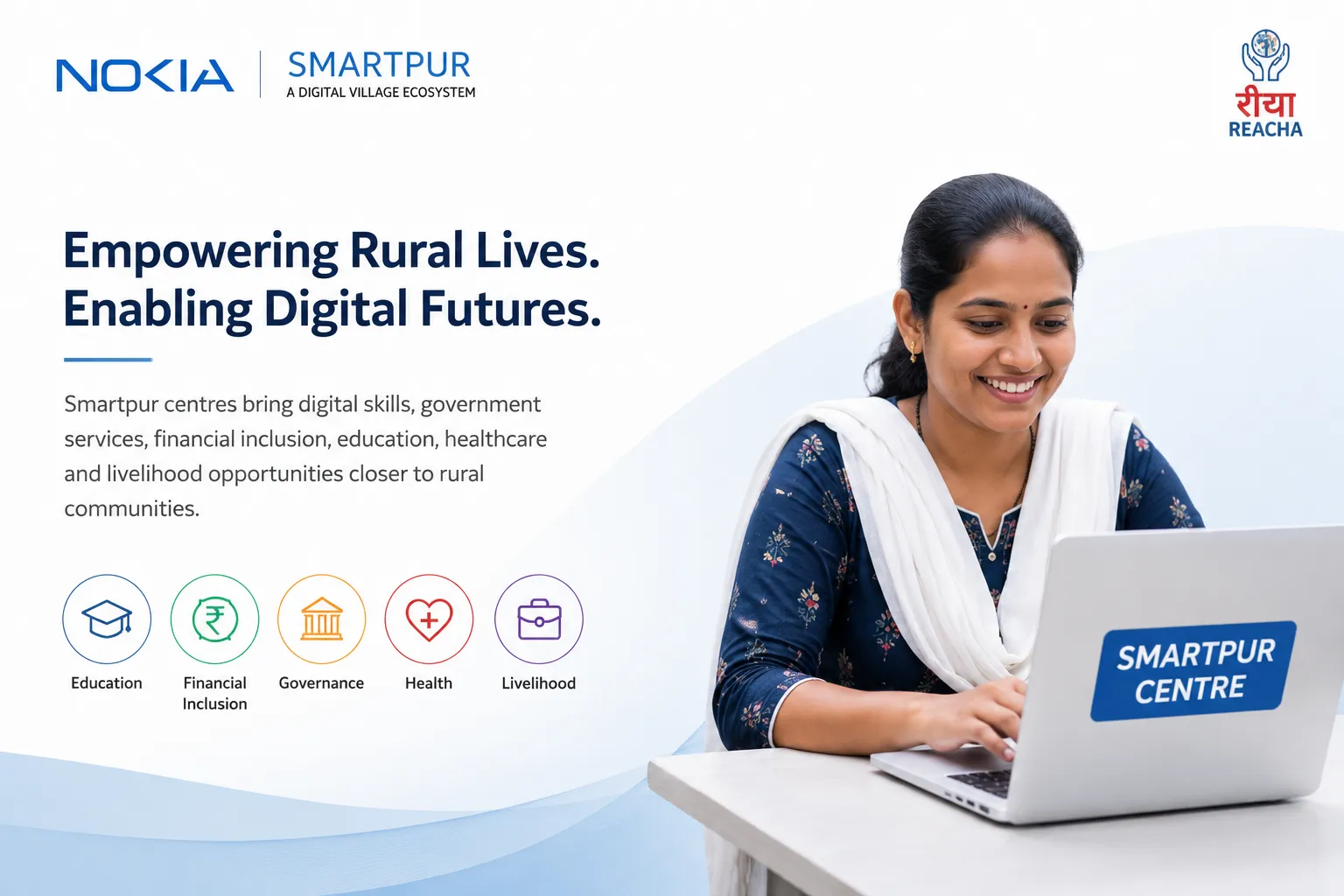
For years, Sunita Devi, a 34-year-old resident of a small village in Samba district, relied solely on seasonal agricultural work and the modest income generated through her Self-Help Group (SHG). While determined to contribute more to her family's financial stability, she had limited exposure to digital technology and lacked the confidence to access government schemes or explore entrepreneurial opportunities.
The arrival of the Nokia Smartpur Centre, implemented by REACHA, marked a turning point in her journey. Through regular awareness sessions and digital literacy training, Sunita learned how to use computers, navigate online government portals, access banking services, and understand financial inclusion programmes. Encouraged by the Centre Facilitator, she also participated in entrepreneurship orientation sessions and received guidance on applying for government-supported livelihood schemes.
With the Centre's continuous support, Sunita expanded her SHG activities by starting a small home-based spice packaging and food processing enterprise. Smartpur helped her connect with the relevant government departments for registration, facilitated her application for financial assistance, and introduced her to digital payment systems, enabling her to manage customer transactions more efficiently.
Within a year, her enterprise began generating a steady monthly income of approximately ₹15,000–₹18,000, significantly improving her family's financial security. She has since employed two other women from her village on a part-time basis, creating additional livelihood opportunities within the community.
Beyond financial progress, Sunita has become a role model for women in nearby villages. She regularly encourages members of local Self-Help Groups to participate in Smartpur programmes, adopt digital services, and explore entrepreneurship instead of relying solely on traditional income sources.
Today, Sunita believes that access to knowledge and digital services has transformed not only her livelihood but also her confidence and leadership within the community.
"Smartpur gave me more than digital skills. It gave me the confidence to dream bigger, start my own business, and inspire other women to believe that opportunities can begin right here in our village."

The Challenge
Limited Digital Literacy and Access
Sunita had little exposure to digital technology and lacked the knowledge to use online government portals, banking services, and digital payment systems. Accessing essential services often required travelling to nearby towns, making the process time-consuming and expensive.
Limited Livelihood Opportunities
Her family's income depended mainly on seasonal agricultural work and small earnings from a Self-Help Group, which provided limited financial stability. Without proper skills, market access, or entrepreneurial guidance, generating sustainable income was a constant challenge.
Difficulty Accessing Government Schemes
Although several government schemes could support rural entrepreneurs, the lack of awareness, documentation support, and application guidance prevented Sunita from benefiting from available financial assistance and livelihood programs.
Low Confidence to Start a Business
Like many rural women, Sunita lacked the confidence and knowledge to establish and manage her own enterprise. The absence of mentorship and business training made entrepreneurship seem out of reach.
Limited Employment Opportunities for Women
Women in the village had very few opportunities to earn independently. Most depended on irregular agricultural work, with limited access to skill development, digital resources, or income-generating activities close to home.